Latest whitepaper
Get your free 24 page whitepaper in your mailbox

This white paper contains more detailed info about our services and equipment. Also, you get inside tips from our experts.

We will not share your information with anyone. Please see our privacy statement for more information.
Conbit is working on oil and gas assets all around the globe
You will receive the whitepaper within 10 minutes in your mailbox.
While waiting...
We invite you to visit our YouTube channel here.
Didn't receive anything?
Please send us an email and one of our team members will send it through to you.
info@conbit.eu
Oops! Something went wrong while submitting the form.
Oil, Gas and Industrial Applications
Market -

Oil, Gas and Industrial Applications

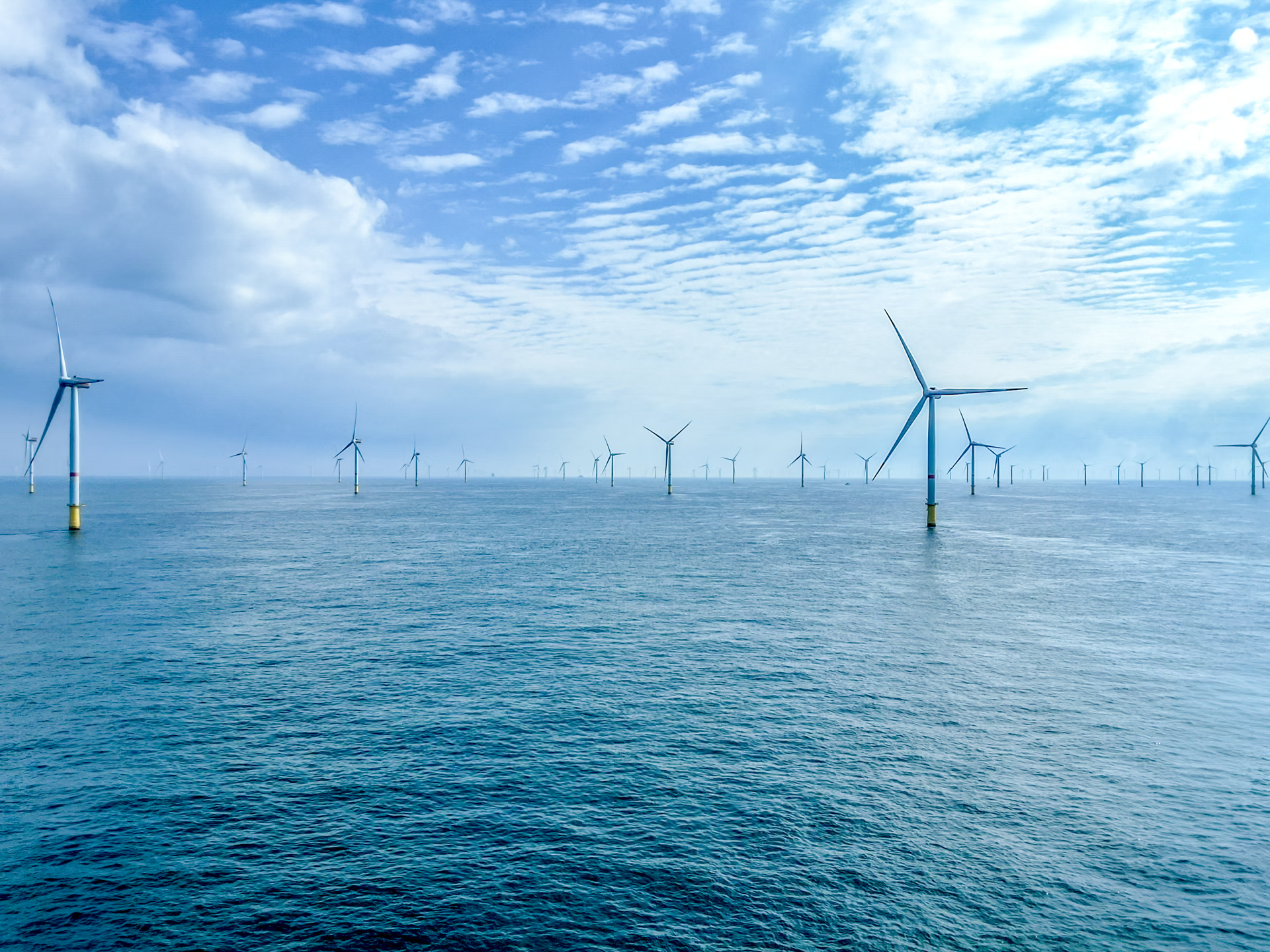
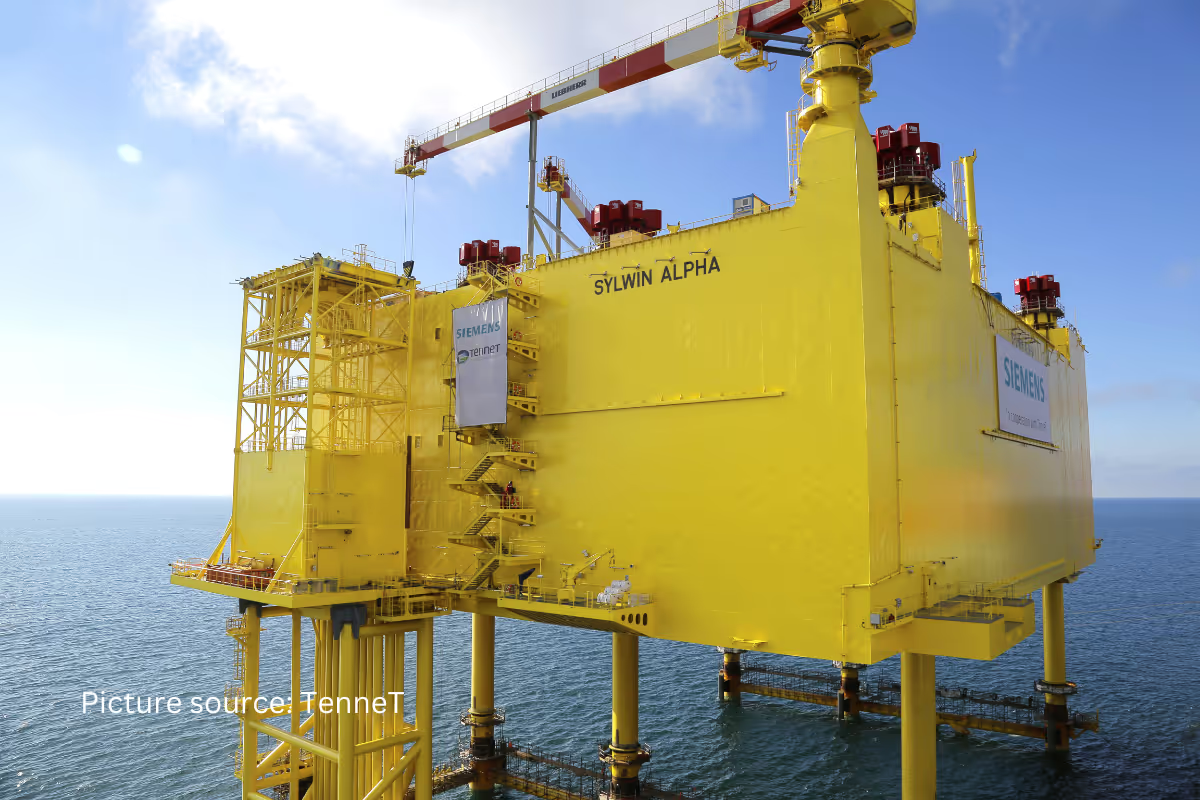
Conbit can assist with lifting in offshore wind projects
Oil, Gas and Industrial Applications

Conbit Offers Alternatives

Reducing Offshore Project Costs

Conbit is dedicated to reducing project costs. We help our clients achieve savings by lowering the dependence on high-cost vessels. But how do we make that happen?

Minimizing Vessel Requirements

In offshore operations, the marine spread often represents a major share of the total operating expenses. A key cost driver is the required lifting capacity. Conbit develops smart solutions that reduce or eliminate the need for large cranes by applying flexible lifting systems and innovative approaches to complex lifting challenges. By minimizing the required lifting capacity, more vessels become suitable for the job, creating competition and ultimately lowering day rates.

Optimizing Offshore Time

Working closely with our clients, we also focus on shortening project schedules by reducing the number of offshore days needed for maintenance or modification activities. Efficient preparation and execution translate directly into cost savings.
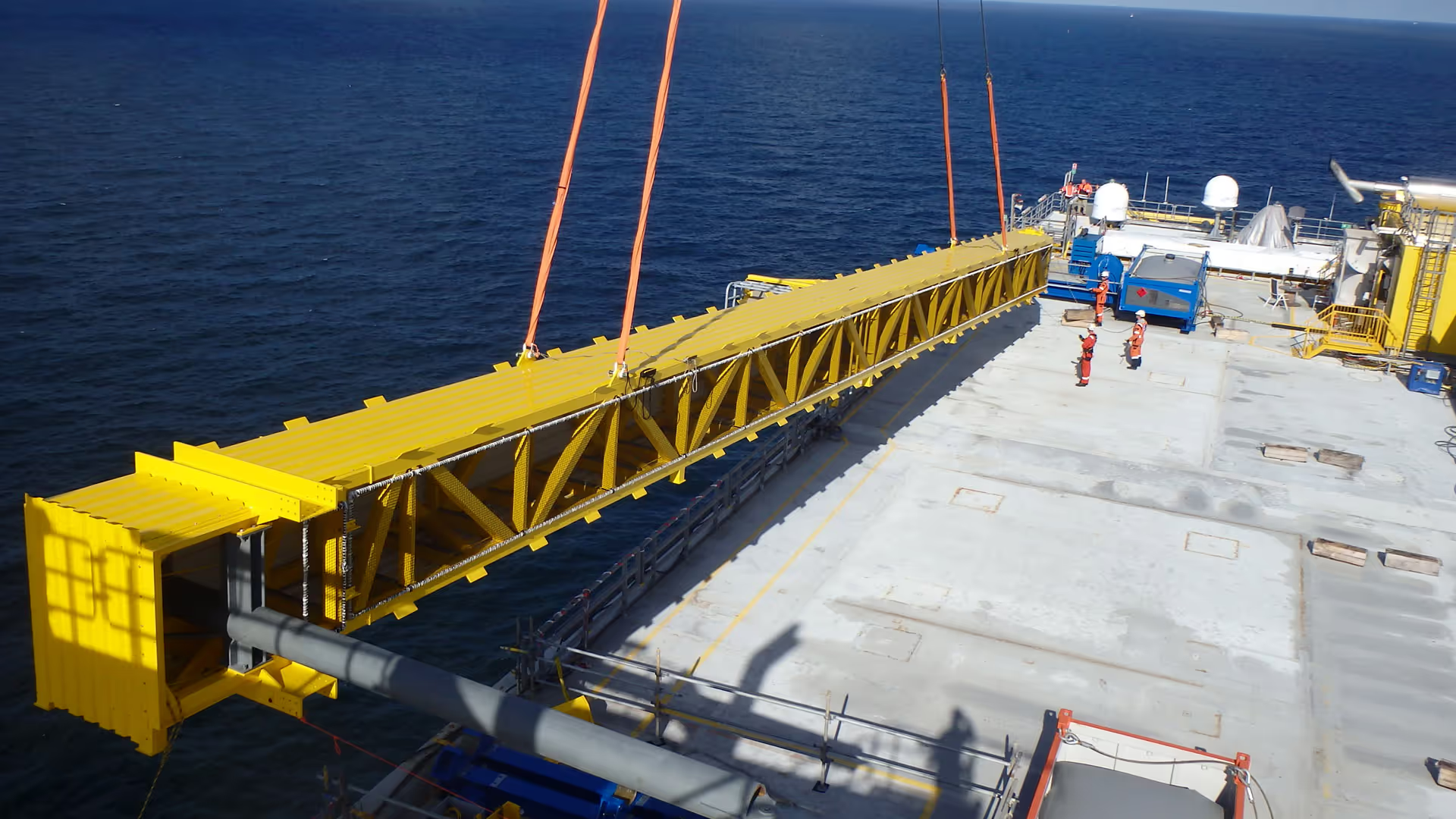
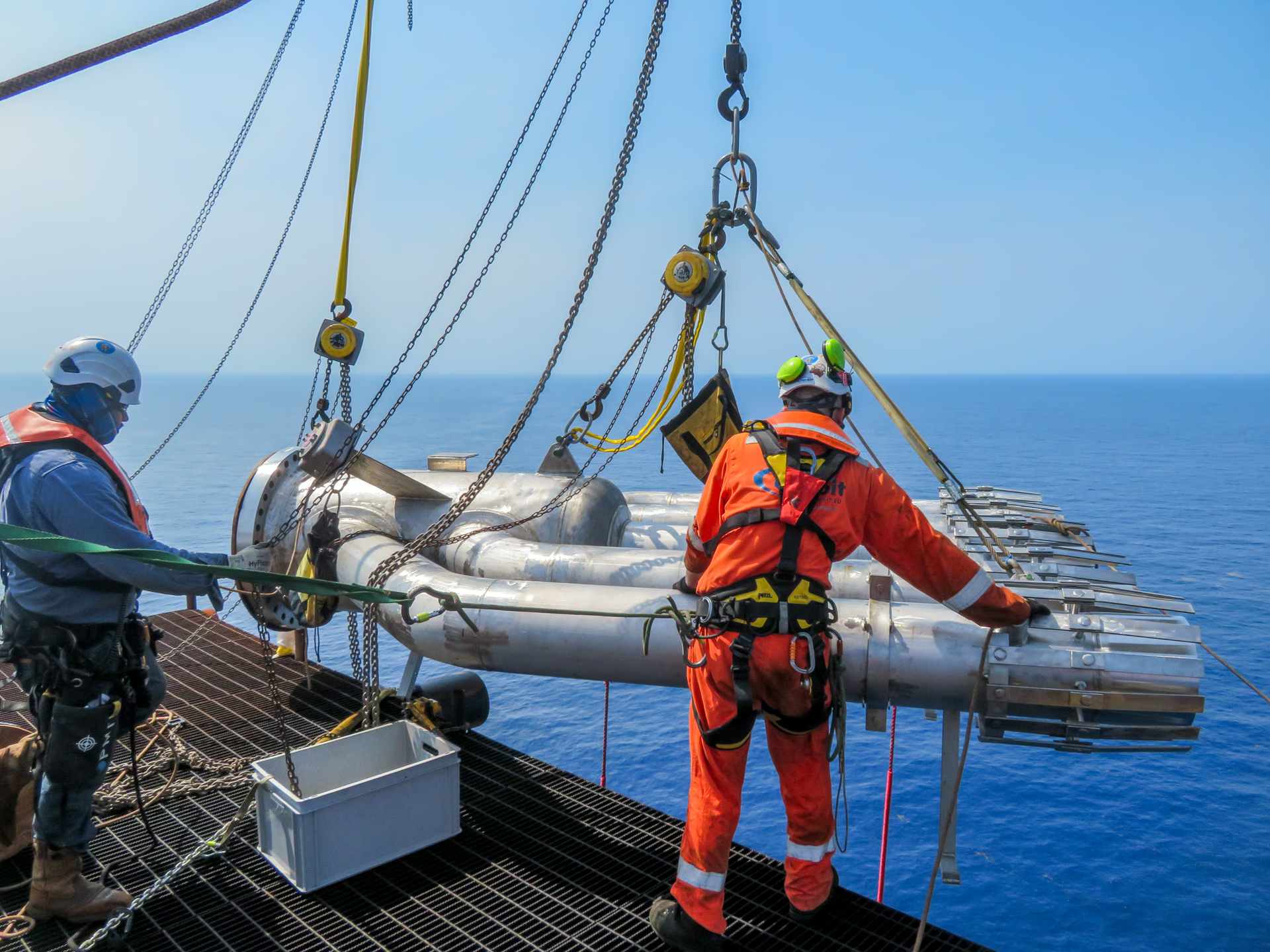
Installation of cable riser protection frame

Offshore Lifting: The Critical Phase

Offshore lifting marks the final and most critical phase of your project. It is the moment when all preparation comes together, the new module is ready, the upgrade is complete, and execution offshore becomes the decisive step.

When Execution Determines Success

This phase can determine the overall success of your project. A well-executed lifting operation ensures smooth integration, while inefficiencies or safety risks can jeopardize months of hard work. That’s why we treat your lifting challenge as our own.

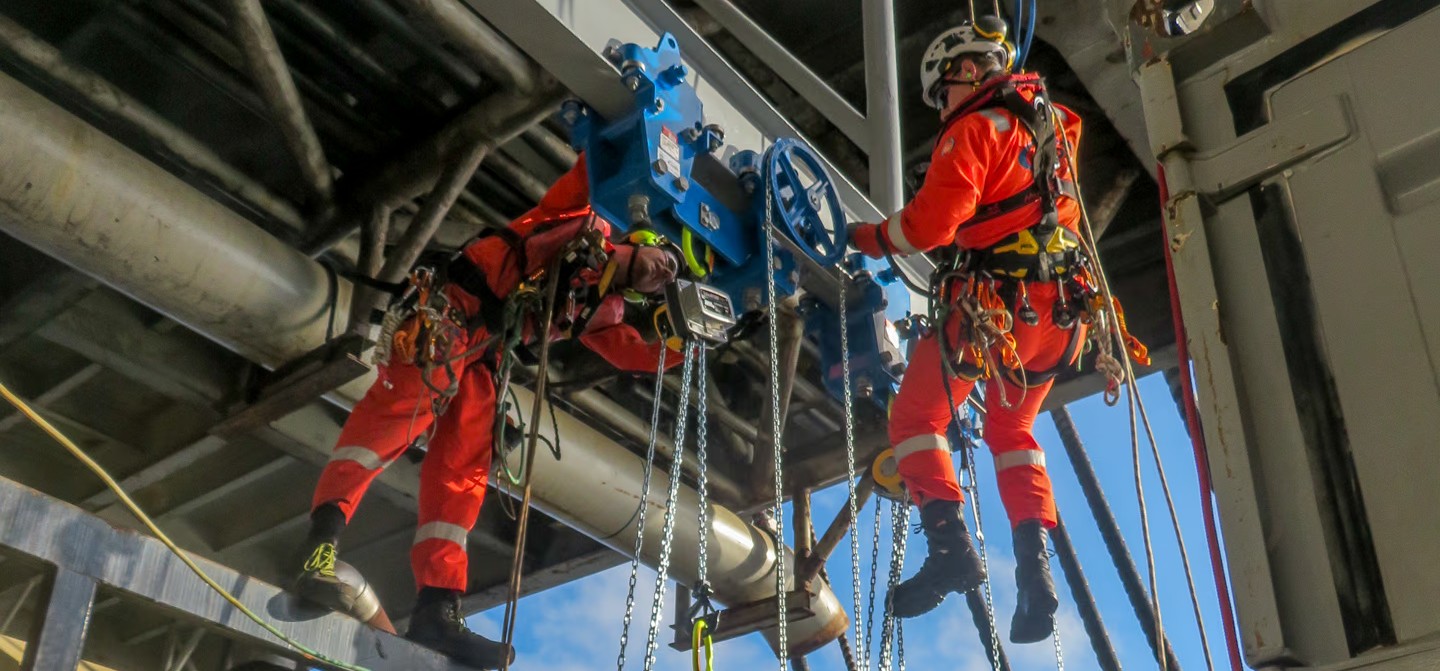
Experience That Reduces Risk

Conbit understands the journey that leads to the construction phase. We recognize the pressure, complexity, and intensity of offshore projects, and we work proactively to eliminate uncertainties and avoid unexpected challenges.

Proactive Support and Clear Communication

Our team supports you in achieving your objectives. We communicate openly about potential risks, concerns, or inefficiencies, and we stay committed to delivering improvements that keep your project on schedule and within budget.

Safety drives everything we do.

This philosophy guides all our activities.

At Conbit, we complete every project with precision, care for people, and respect for the environment around us.
Watch how we prepare and execute

We're certifitied for the job

ISO 9001

ISO 9001

We are ISO 9001 certified. ISO is a quality standard that shows our commitment to continuously improving our organization.
ISO 14001

ISO 14001

ISO 14001 shows that we fulfil the requirements for an environmental management system developed by the International Organization for Standardization.
ISO 45001

ISO 45001

We are ISO 45001 certified. It is the new ISO standard that is being developed for occupational safety and health.
achilles power & tech

achilles power & tech

Member of the Achilles Power & Tech supplier network, recognized for meeting rigorous compliance, safety, and operational standards for the power and technology sectors.
Achilles UNCE (Utilities Nordics & Central Europe) member certificate

Achilles UNCE (Utilities Nordics & Central Europe) member certificate

Member of the Achilles Utilities Nordics & Central Europe (UNCE) network, demonstrating verified compliance, safety, and sustainability standards for the utilities sector.

Frequently asked questions

Oil, Gas and Industrial Applications

What are the responsibilities of different stakeholders in the crane overhaul project?

  • Independent specialist, like Conbit:
    • Lead the inspection, use advanced diagnostic tools, and document findings.
    • Prepare and deliver a detailed report on the status of the cranes.
    • Identify and source required spare parts.
    • Supervise installation and ensure quality standards.
    • Install and upgrade control systems, calibrate and test.
    • Lead repair and maintenance tasks, implement preventive maintenance schedule.
    • Design and supervise upgrades, ensure compliance with industry standards.
    • Conduct rigorous testing, obtain necessary certifications.
    • Provide training and certification for crane operators.

  • Local Crane Service Company:
    • Provide manpower for physical inspection and support.
    • Assist in data collection and initial observations.
    • Assist in logistics and inventory management.
    • Perform physical installation of new cables.
    • Assist in physical installation and initial setup.
    • Perform physical repair and maintenance tasks.
    • Assist in physical installation and setup.
    • Assist in testing procedures and data collection.
    • Assist in organizing training sessions and logistics.

  • OEM:
    • Provide technical specifications and support.
    • Review and validate the report.
    • Supply OEM-certified spare parts.
    • Provide technical guidance and support.
    • Provide technical guidance and specifications.
    • Provide certification and validation.
    • Provide training materials and support.

Please send us a mail if this didn't answer your question. We'll get back to you as soon as possible.

What are the key steps involved in the offshore crane overhaul process?

  1. Inspection and Assessment: Conduct a thorough inspection to assess the current condition of the cranes, including structural integrity, mechanical functionality, and compliance with safety standards.
  2. Detailed Report: Provide a detailed report on the status of the cranes, highlighting any issues and necessary repairs or upgrades.
  3. Spare Parts Provision: Supply the required spare parts to replace worn-out or damaged components.
  4. Cable Installation: Install new cables to ensure proper electrical and mechanical functioning.
  5. Hardware Installation: Install other new hardware components as needed to enhance the cranes' performance.
  6. Controls and Instrumentation: Install and upgrade the controls and instrumentation systems to improve operational efficiency and safety.
  7. Repair and Maintenance: Perform essential repairs and maintenance tasks to fix any identified issues and ensure the cranes are in optimal working condition.
  8. Upgrades and Modernization: Upgrade the cranes with modern technology and equipment, such as new control systems, improved hydraulic systems, and enhanced safety features.
  9. Testing and Certification: Conduct rigorous testing to ensure the cranes are safe and fully operational, followed by obtaining the necessary certifications from relevant authorities.
  10. Operator Training: Provide training and certification for crane operators to ensure they are qualified to operate the cranes safely and efficiently

Contact Conbit to get the best support you can think off and leaving you in control.

Please send us a mail if this didn't answer your question. We'll get back to you as soon as possible.

What are the options for installing a lifeboat davit?

1. Deck Crane:

  • Most economic option.
  • Often out of reach or lacking the required capacity.

2. Crane Vessel:

  • Expensive option.
  • Floating to floating operation in congested areas of the offshore asset.

3. Modular Lifting System:

  • To be erected at the site.
  • Provides schedule flexibility.
  • Can be used to lift directly from a supply vessel.

Reach out to Conbit for more information.

Please send us a mail if this didn't answer your question. We'll get back to you as soon as possible.

Can a lifeboat system be installed underneath a helideck?

Often, the helideck provides a good option to install a lifeboat system.

1. SOLAS Regulations:

  • SOLAS does not specifically indicate if installing a lifeboat underneath a helideck is allowed.
  • General requirements for lifeboats include proper construction, ample stability, sufficient strength, and fire-retardant or non-combustible materials.

2. Installation Considerations:

  • Crane vessel and platform crane may not reach the installation location.
  • Conbit provides solutions using special rigging techniques and modular lifting systems to perform the installation.

3. Class Approvals:

  • Ensure that the installation meets class approval requirements.

4. Supplier Requirements:

  • Check the installation height and other requirements with the supplier of the lifeboat system to ensure compliance.

Please send us a mail if this didn't answer your question. We'll get back to you as soon as possible.

How to Assess the Feasibility of a Lifeboat Location?

1. Space for Lifeboat Installation:

The first step in assessing the feasibility of a lifeboat location is to ensure there is adequate space for the installation. This includes considering the dimensions of the lifeboat and the necessary clearance for safe deployment. It's crucial to evaluate the available space on the platform or vessel to accommodate the lifeboat and its associated equipment.

2. Routing Towards the Lifeboat for Fast Evacuation:

Another critical factor is the routing towards the lifeboat. In an emergency, personnel must be able to reach the lifeboat quickly and safely. This involves planning clear and unobstructed pathways from various parts of the platform or vessel to the lifeboat. The routes should be well-marked and free of obstacles to ensure a swift evacuation.

3. Constructability:

Constructability is often a challenge, especially in locations that are not easily accessible by traditional crane vessels. In such cases, modular lifting systems, like those provided by Conbit, offer a viable solution. These systems can be assembled on-site, allowing for the installation of lifeboats in areas that would otherwise be unreachable. This approach not only enhances the feasibility of the installation but also ensures that the lifeboat can be deployed efficiently and safely.

Please send us a mail if this didn't answer your question. We'll get back to you as soon as possible.

Why Lifeboat Installations at FPSOs?

Lifeboat installations on Floating Production Storage and Offloading (FPSO) units are critical for ensuring the safety of personnel in emergency situations. Given the remote and often harsh environments in which FPSOs operate, having reliable and readily accessible lifeboats is essential.

Additionally, there is a growing trend of increasing the Personnel on Board (POB) at FPSOs, which further underscores the need for robust lifeboat systems. These installations must be meticulously planned and executed to guarantee that lifeboats are operational as soon as possible, minimizing risks and enhancing the overall safety of the crew

Please send us a mail if this didn't answer your question. We'll get back to you as soon as possible.

Can anyone operate your rental cranes?

We recommend personnel to have a crane operator qualifications and experience. It depends on local legislation what type of certificate is required. The qualifications can be different for each crane we have in our rental fleet.

Please send us a mail if this didn't answer your question. We'll get back to you as soon as possible.

How long is the leadtime for your rental cranes?

If a crane is not out in the field, it can be made available and ready for transport within 2 weeks. We always perform a system test before we ship a rental crane out. To plan these tests we need some days, which makes up most of the leadtime.

Please send us a mail if this didn't answer your question. We'll get back to you as soon as possible.

Do you own vessels to assist you with some of the cargo handling projects?

No, we do not own them ourselves, but we have worked in simops (simultaneous operations) with all kinds of vessels over the course of years.
We know what is asked of both of us to make the job run as smooth as possible.

Please send us a mail if this didn't answer your question. We'll get back to you as soon as possible.

Do you ever weld something on the offshore asset?

We try to avoid hot work at any time. We frequently bolt, strap or clamp our equipment down to the existing structure so we can take everything away once finished. You'll have a clean working site left!

Please send us a mail if this didn't answer your question. We'll get back to you as soon as possible.

How do you get your equipment up on the flare access platform?

We send somebody up there with a sheave and a winch wire to install the LRE (light rigging equipment).

This helps us to lift up the heavier components to build up the lifting solution designed for your project.

Please send us a mail if this didn't answer your question. We'll get back to you as soon as possible.

Can Conbit offer services to the end users of high tech equipment?

Conbit can perform inspection, maintenance and modification of lifting and handling equipment all over the world. We support our high-tech clients with a full after-salesprogram. We use our global network to act fast on client requests.

Please send us a mail if this didn't answer your question. We'll get back to you as soon as possible.

Can Conbit perform structural engineering services?

Conbit uses its structural engineering services to support its turnkey projects. Occasionally, we support our clients with life time extension analysis and structural design services. Also within the decommissioning industry, we support with structural engineering services as part of our complete heavy lift preparation scope.

Please send us a mail if this didn't answer your question. We'll get back to you as soon as possible.

Is Conbit selling lifting equipment?

Conbit originated as an engineering company, which makes us well-positioned to design your bespoke lifting equipment.

However, we are specialized in a few specific pieces of lifting equipment. Those specific sets of equipment can be supplied to our clients.

Conbit has supplied flare tip handling systems, handling equipment to be used in cleanrooms, and general rigging and lifting equipment, such as winches, chainhoists, etc.

Please send us a mail if this didn't answer your question. We'll get back to you as soon as possible.

Where is the Conbit equipment located?

Conbit is operating warehouse facilities on most continents.

For the transportation of the equipment from the main warehouse to all over the world we use both sea and air freight depending on the project.

Please send us a mail if this didn't answer your question. We'll get back to you as soon as possible.

Is Conbit IRATA certified?

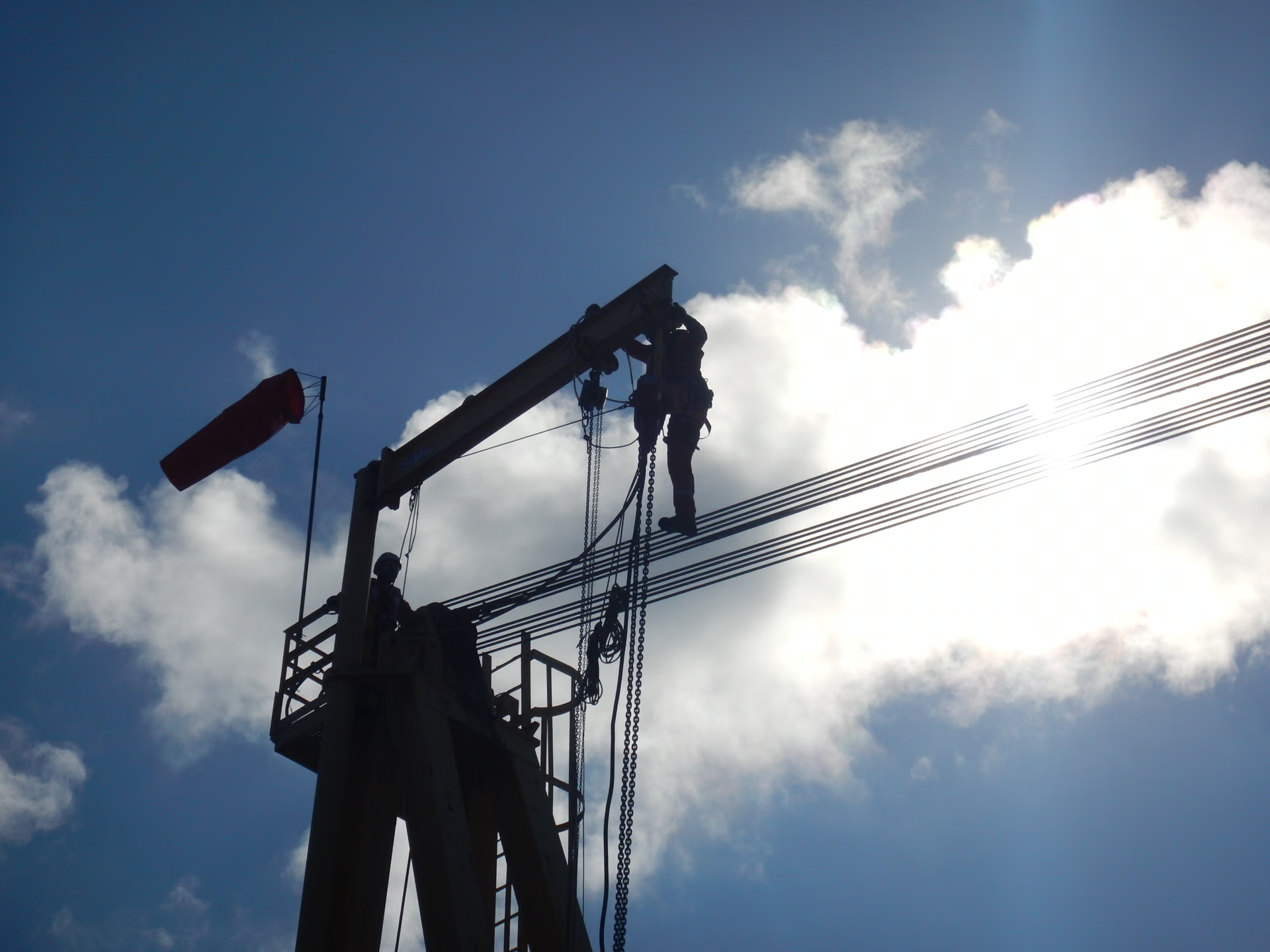
Conbit has been using the IRATA guidelines to perform rope access for many years. Conbit is registered and certified as an IRATA certified company.

Please send us a mail if this didn't answer your question. We'll get back to you as soon as possible.

Is Conbit supplying rigging equipment to operate retractable flares?

Conbit owns many sheaves, shackles and winches that can be used to operate retractable flare systems. This equipment is part of our rental fleet.

Owners of retractable flares are facing difficulties to keep the rigging accessories in proper condition, because it is not used frequently.

With the Conbit rental equipment, this challenge is mitigated. The Conbit equipment is always in good condition and carries the right certificates.

Please send us a mail if this didn't answer your question. We'll get back to you as soon as possible.

Can Conbit perform maintenance on guy wired flares?

There are many challenges when maintaining guy wired flares. Conbit’s engineers and fieldteams understand these challenges.

They work together to maximize the lifetime and integrity of guy wire supported flares all over the world. Conbit’s guy wire integrity program offers a complete range of service, including condition monitoring of guy wired supported flares.

Please send us a mail if this didn't answer your question. We'll get back to you as soon as possible.

Can Conbit offer its services worldwide?

Conbit has been working in all parts of the world, mainly on oil and gas platforms. Within the offshore wind industry, we have mainly been working in Europe until today, but can easily support clients all over the world.
Please send us a mail if this didn't answer your question. We'll get back to you as soon as possible.
No items found.

Contact

We're here to answer your questions

Do you have any technical questions, general enquiries or do you need additional information? Don’t hesitate to contact our experts. With their expertise and experience in lifting services, they will gladly help you.

You can contact us by phone or email. We’re looking forward to your questions!
Bram van Oirschot

Bram van Oirschot

Commercial Director
Are you looking for Conbit High Tech?
Visit website