Case
DGUV V3 OWP Inspections
Carrying out DGUV V3 inspections offshore goes beyond compliance. At Meerwind Sud and Ost, the scope covered the full inspection of fixed electrical installations across 80 wind turbines, including switchgear, transformers, control systems and cabling. Each turbine required systematic verification through visual inspection, testing and functional checks, all executed under offshore conditions where access is limited and reliability is critical.
Watch how we prepare and execute
Watch how we prepare and execute
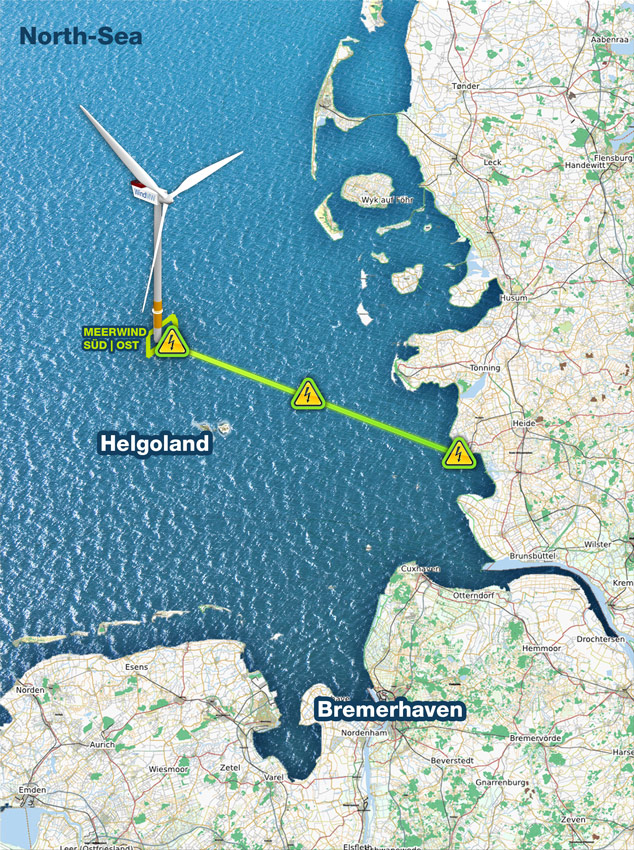
A complex offshore asset
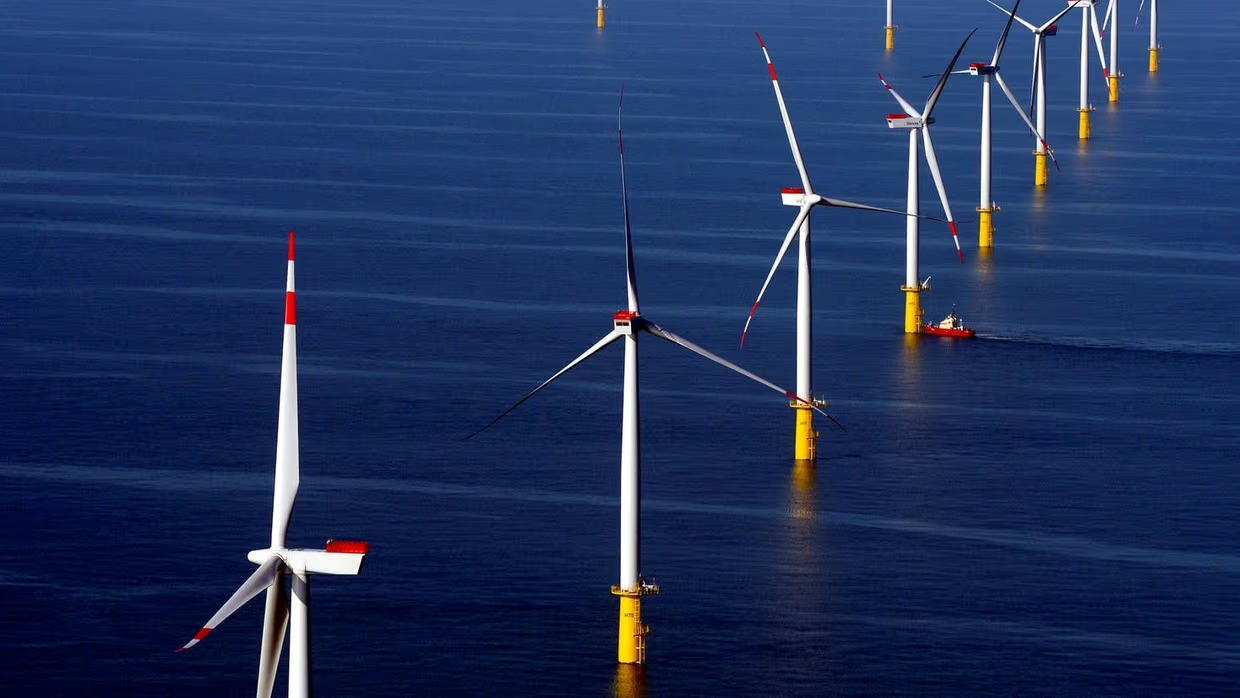
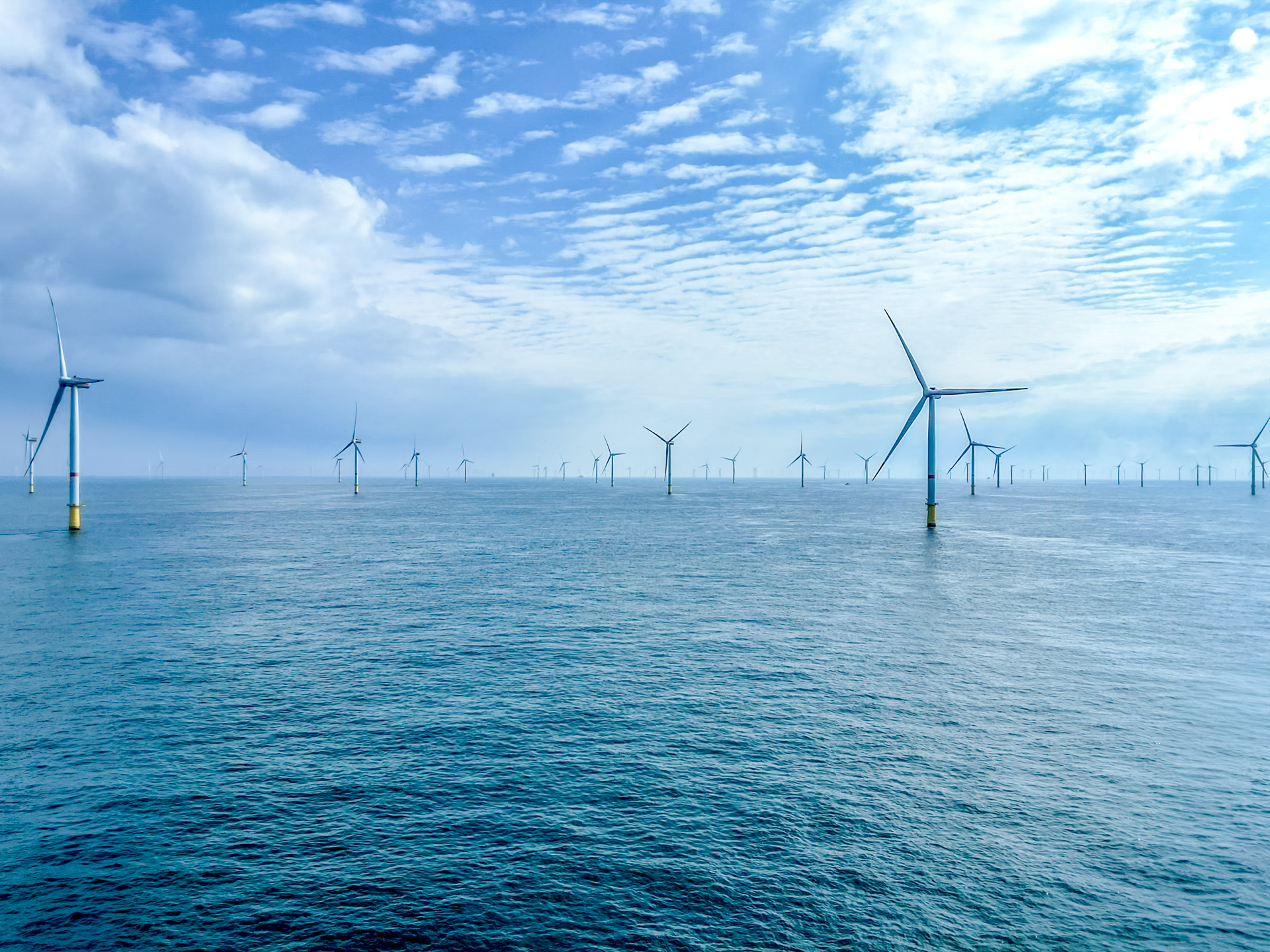
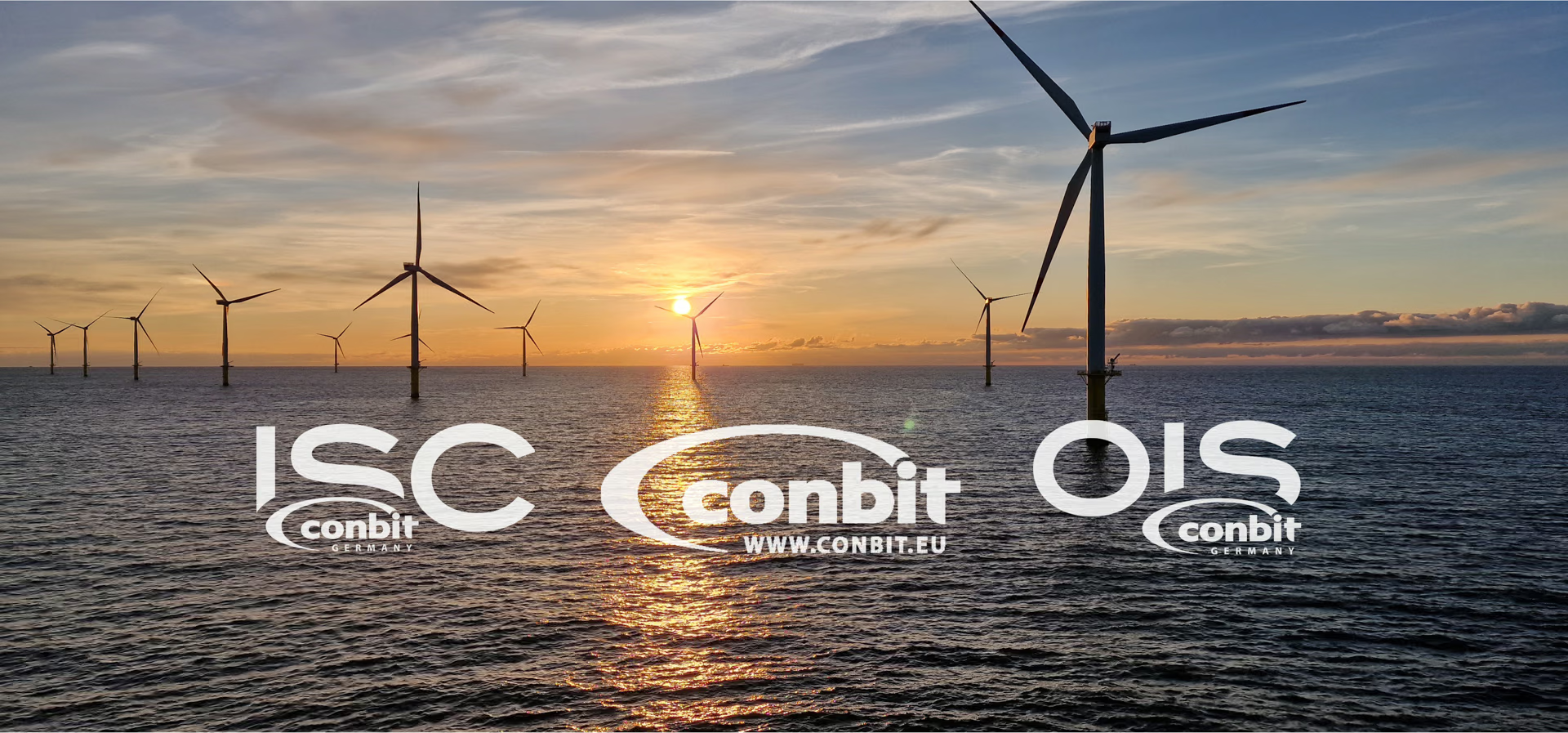
Located roughly 23 kilometres north of Helgoland, Meerwind Sud and Ost is one of Germany’s early large scale offshore wind farms. The project consists of 80 Siemens turbines with a combined capacity of 288 MW, spread across a wide offshore area and connected via an offshore transformer platform. [bg-verkehr.de]
Even under normal conditions, managing the integrity of this many assets is no small task. Offshore, however, everything becomes more demanding. Saltwater exposure, constant humidity, mechanical vibration and restricted access windows all accelerate wear and increase the importance of robust inspection regimes.
From a regulatory perspective, the operator needed to ensure full compliance with DGUV V3 requirements for electrical installations. At the same time, they wanted more than just compliance. They wanted insight into the actual condition of their assets.
Mobilisation from Helgoland
Mobilisation for the inspection campaign was carried out from Helgoland, which served as the logistical base for offshore operations. From there, personnel, tools and inspection equipment were transferred to the turbines using vessel transport aligned with daily weather windows. The proximity of Helgoland to the wind farm allowed for efficient transit times and flexible planning, enabling the teams to maximise productive hours offshore while maintaining strict safety and access procedures.
Cooperation with WindMW
The successful execution of the campaign relied on close cooperation with WindMW as the asset operator. Coordination on planning, turbine availability and offshore logistics ensured that inspection activities were seamlessly integrated into ongoing operations. Regular communication and alignment allowed for rapid decision-making when conditions changed, while the shared focus on safety and quality ensured that the inspections were completed efficiently without compromising operational performance.
PRoject case study pdf
Download the PDF of this project case study here.
Thanks for leaving your email address. You can now download the requested case study
Oops! Something went wrong while submitting the form.
No items found.
Related Cases
Related Services
Offshore Wind
Maritime and Port Environment
Lifting Services
Onshore & Offshore
Offshore Wind
Maritime and Port Environment
Hydraulic Services
Onshore & Offshore
Offshore Wind
Maritime and Port Environment
Electrical Services
Onshore & Offshore
Related Blogs
.png)
Contact
We're here to answer your questions
Do you have any technical questions, general enquiries or do you need additional information? Don’t hesitate to contact our experts. With their expertise and experience in lifting services, they will gladly help you.
You can contact us by phone or email. We’re looking forward to your questions!
You can contact us by phone or email. We’re looking forward to your questions!